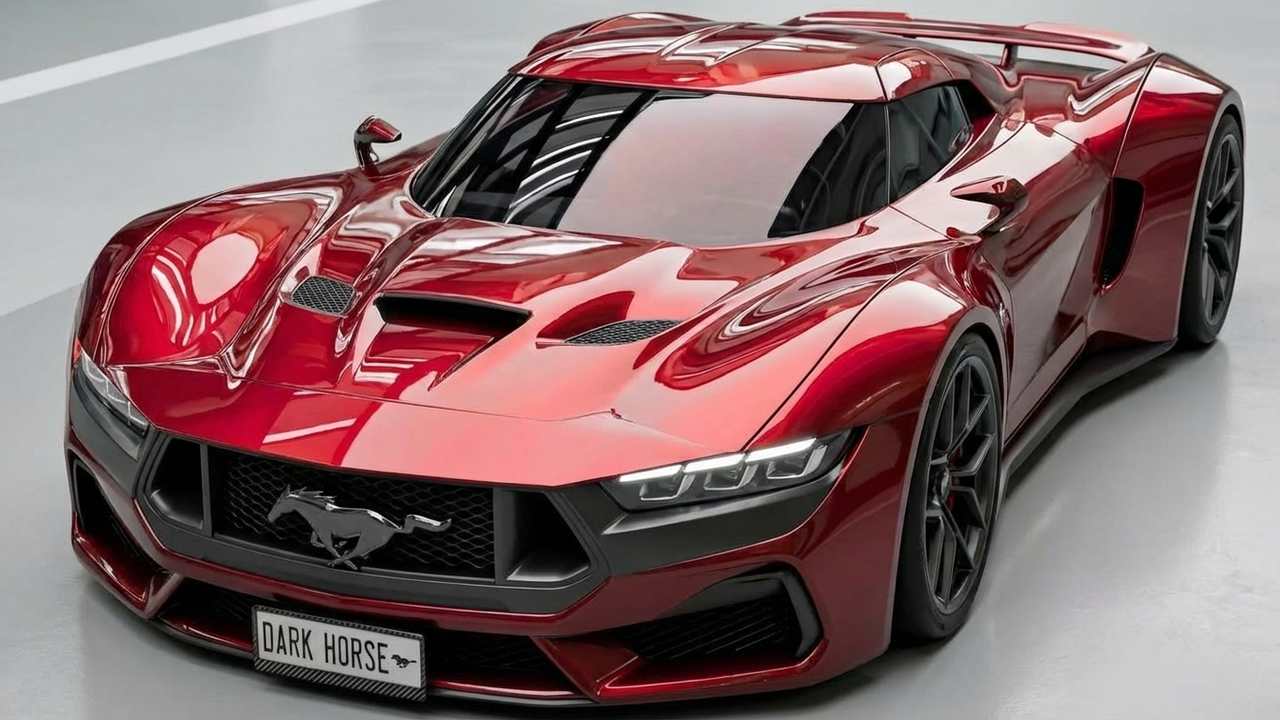
ford mustang gtd 2026 3 arrives as Ford’s statement that a modern, track-capable grand tourer can still be usable on everyday roads. With an 825 hp supercharged V8, a 0-100 km/h time in the 2.9-second bracket and seating for four plazas, this Mustang variant blends raw American power with more thoughtful engineering than prior halo models.

Ford Mustang GTD 2026 3: performance and real-world numbers
Under the bonnet the ford mustang gtd 2026 3 keeps faith with an internal combustion heart: a 5.2-liter supercharged V8 tuned to produce 825 hp and 900 Nm (664 lb-ft) of torque. Power is routed to the rear wheels through a 7-speed dual-clutch transmission and an adaptive limited-slip differential. Ford quotes a 0-100 km/h time of 2.9 seconds and a top speed electronically limited to 320 km/h.


| Specification | Figure |
|---|---|
| Engine | 5.2 L supercharged V8 |
| Power | 825 hp (615 kW) |
| Torque | 900 Nm (664 lb-ft) |
| 0-100 km/h | 2.9 s |
| Top speed | 320 km/h (limited) |
| Transmission | 7-speed dual-clutch |
| Fuel economy (combined) | Approx. 14.2 L/100 km |
| Plazas | 4 |
| Kerb weight | 1,820 kg |
| Starting price (USD) | $165,000 |
On the road the combination of torque and a quick-shifting DCT gives the ford mustang gtd 2026 3 an urgent shove that feels immediate but controllable. The adaptive magnetic ride suspension and active aero, front splitter and adjustable rear wing, work together to keep the chassis planted. In normal mode the ride is firmer than a regular Mustang GT but far from punishing; in track settings it sharpens to deliver precise turn-in and high lateral grip.
Ford Mustang GTD 2026 3: design, interior and technology
Visually the ford mustang gtd 2026 3 is a revised interpretation of Mustang language: broader hips, larger brake ducts and a more aggressive front fascia designed for cooling rather than show. The cabin is a modern take on the Mustang template. The dashboard has a 12.4-inch digital instrument cluster and a 15.0-inch center touchscreen with updated software for navigation and connectivity.

Materials are improved across the board, Alcantara and contrast stitching on the bolstered seats, lightweight carbon-fiber trim and a thicker steering wheel. Practical elements remain: two usable rear seats (plazas), front storage, and improved ergonomics for tall drivers. Ford has also prioritized seguridad: adaptive cruise, lane-keeping assist, a 360-degree camera, and carbon-ceramic brakes as part of the standard safety package.
Driving it briskly on a mixed route reveals a car that’s less theatrical than earlier halo Mustangs; it’s more sorted, more confident at speed and more forgiving when pushed hard.
Despite the absence of a híbrido power option for this model, Ford keeps the GTD as a pure V8, the car incorporates efficiency-minded measures such as cylinder deactivation and stop-start to reduce urban fuel draw. If you need a hybrid for daily commuting, Ford’s range offers other models, but the GTD prioritizes pure-blood performance and sound.

Practical tech and convenience
- Driver-assist suite with automatic emergency braking and blind-spot monitoring
- Adjustable steering and multiple drive modes including a user-configurable setup
- Optional track telemetry and data logger for circuit days
Pricing and trim breakdown
The model line starts at about $165,000 in the United States. Options that add ceramics, carbon wheels, and a forged wheel upgrade can push the MSRP north of $200,000. In Europe, tariffs and homologation make the starting price climb closer to €180,000. For buyers weighing value, the standard equipment list is generous but high-cost options are where most buyers will personalize the car.
Market context, rivals and who should consider it
The ford mustang gtd 2026 3 lands into a segment that mixes traditional sports cars and high-performance machines. Direct rivals include the Chevrolet Corvette Z06, Porsche 911 Turbo and hardcore versions of the BMW M4. Each rival takes a different approach: the Corvette pairs mid-engine balance with sharp dynamics, the 911 focuses on refinement and daily usability, while the M4 trades in-line six turbocharging and track-bred chassis work.
There’s also a growing argument for high-performance SUVs: if you need more space and similar performance, an M3-derived suv such as the BMW X5 M will deliver similar straight-line pace with greater cargo flexibility. The GTD, by contrast, is for buyers who want an analog throttle feel, V8 soundtrack, and a car that still feels modern and renovado in its engineering language.
Pros and cons
- Pros: Massive low-end torque, thrilling soundtrack, sharp chassis with real track capability, four plazas and complete seguridad systems.
- Cons: Fuel consumption around 14 L/100 km, limited rear visibility, running costs and options can make total purchase expensive.
Buying advice
If you’re shopping the ford mustang gtd 2026 3, test-drive both the base GT and the GTD back-to-back to appreciate how the suspension and aerodynamics change behavior. Budget for carbon-ceramic brakes and maintenance, both are costly but essential if you plan regular track days. Consider whether the lack of a híbrido drivetrain is a dealbreaker; if daily efficiency is important, look at Ford hybrids or high-performance hybrid rivals.
Verdict
The ford mustang gtd 2026 3 is a confident reimagining of Mustang performance: modern, powerful and surprisingly usable. It doesn’t chase hybrid efficiency, instead doubling down on visceral V8 performance while adding the seguridad, tech and chassis refinement that make it more rounded than past halo models. For buyers who want raw power, four seats and an engaging drive, it’s one of the most coherent high-performance choices on the market today.
FAQ
Is the Ford Mustang GTD 2026 3 a hybrid?
No. The ford mustang gtd 2026 3 is powered by a 5.2-liter supercharged V8; Ford offers hybrid options elsewhere in its lineup but not for this model.
How many seats (plazas) does it have?
It has four plazas, two front bucket seats and two smaller rear seats suitable for short trips or smaller passengers.
What is the fuel economy of the GTD 2026 3?
Ford’s combined estimate is approximately 14.2 L/100 km. Expect higher consumption if you drive it hard or use track modes frequently.
How does it compare to a high-performance SUV?
Compared with a performance suv like the BMW X5 M, the GTD offers a more engaging chassis and better weight distribution for corners, while the SUV provides more interior space and often better daily comfort.
What is the starting price?
Starting price is roughly $165,000 in the U.S., with options and market adjustments potentially raising the final cost significantly.