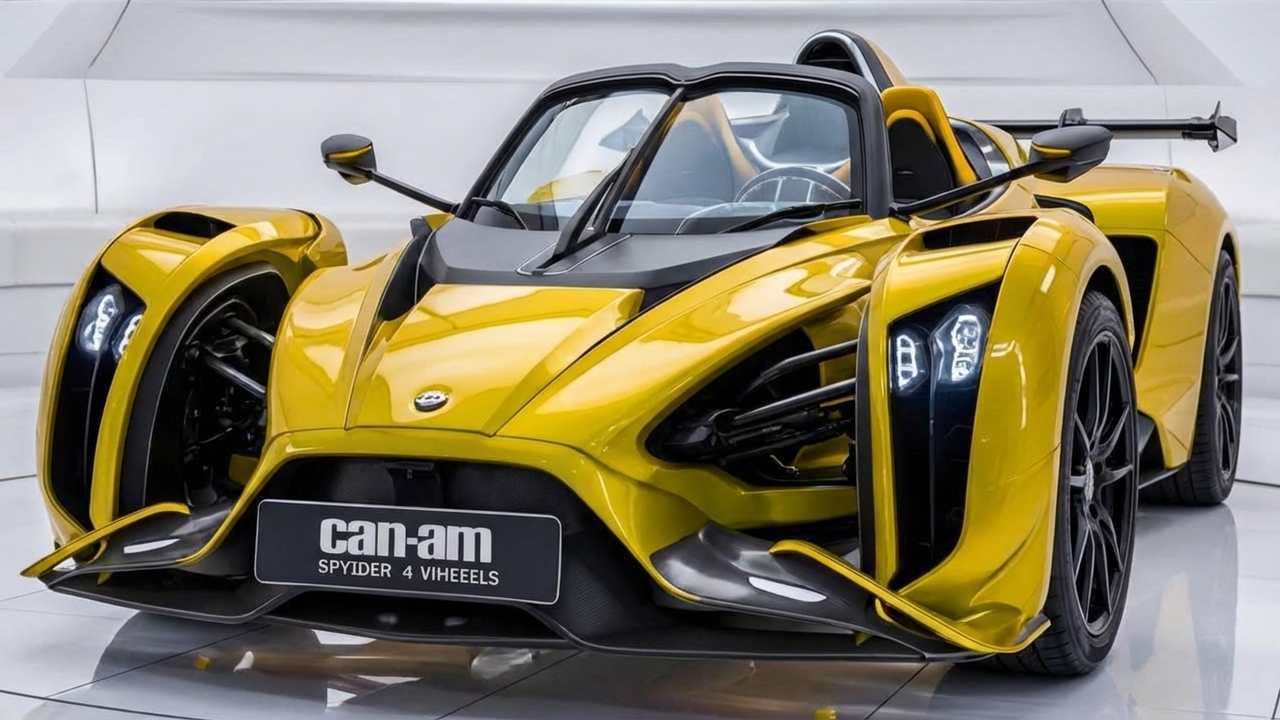
diseño exterior vanguardista is the headline promise of the Can-Am Spyder 2026, and the machine wears it boldly from nose to tail. The new Spyder combines sharp surfaces, active aero elements and LED lighting to announce a rethink of three-wheeled vehicles; at the same time it preserves the two plazas layout that defines its day-to-day usability, while improving seguridad and efficiency for riders who want a modern alternative to both motorcycles and small suv-style transport.

diseño exterior vanguardista: qué cambia en el Spyder 2026
The visible changes are not mere styling updates. Can-Am has revised the front geometry, introducing larger aerodynamic fins and a lower nose that reduces lift at speed. The full-LED headlamp clusters integrate daytime running patterns that not only look moderna but also improve visibility in urban traffic. Materials extend beyond paint — composite panels and targeted aluminum sections shave weight while keeping torsional stiffness where it matters.


Under that bodywork there are two primary powertrain choices. The base engine is a Rotax 1330 ACE-derived three-cylinder producing 170 hp (125 kW) and 205 Nm of torque, with a six-speed semi-automatic transmission and ride-by-wire throttle. A hybrid variant pairs a downsized internal-combustion unit with an electric motor for a combined 210 hp (155 kW) and 250 Nm peak torque. Manufacturer fuel-consumption claims are 6.8 L/100 km for the combustion model and 4.9 L/100 km combined for the híbrido system.
| Specification | Standard | Hybrid option |
|---|---|---|
| Engine | Rotax 1330 ACE 3-cylinder | 1.0L inline + electric motor |
| Power | 170 hp / 125 kW | 210 hp / 155 kW (combined) |
| Torque | 205 Nm | 250 Nm (combined) |
| 0–100 km/h | 4.8 s | 3.9 s |
| Weight | approx. 430 kg | approx. 470 kg |
| Fuel economy (WLTP equiv.) | 6.8 L/100 km | 4.9 L/100 km |
| Seating | 2 plazas | 2 plazas |
| Price (MSRP) | From $24,995 USD | From $31,995 USD |
diseño exterior vanguardista y su impacto en la dinámica
On the road, the Spyder’s revised profile affects more than looks. The low, wide stance and the split front track provide a planted character—you feel that design intent the first time you commit to a sweeping bend. Electronic assists include traction control, ABS and an updated stability control that coordinates with a retuned suspension. Brakes are twin 298 mm discs up front with a single rear disc and deliver predictable bite; combined braking systems are calibrated for confident stops with a passenger aboard.

Driving impressions emphasize balance: the Spyder 2026 is quicker off the line than its predecessor (0–100 km/h drops to 4.8 s for the petrol model) and the hybrid feel is immediate thanks to the electric torque fill. Steering is light at low speeds, direct at pace, and the chassis soaks bumps with a blend of compliance and control—traits that make long rides comfortable without sacrificing cornering poise.
Where design meets practicality, the Spyder keeps things sensible. Storage under the seat and small lockable compartments fore and aft replace the trunk volume you’d expect in a small suv, but two real plazas make it usable for weekend trips. Safety systems—lane-keep assist, forward collision warning, and hill-hold—contribute to an overall sense of seguridad that will matter to buyers crossing over from cars.

The Spyder’s diseño exterior vanguardista is also a selling point in a crowded market. Compared to the Polaris Slingshot, which trades comfort for a raw open-air feel, the Spyder is more weather-protected and technologically complete. Against leaning three-wheelers such as the Yamaha Niken, the Spyder offers a clearer two-seat arrangement and car-like controls, which may appeal to drivers less comfortable with motorcycle ergonomics.
Real-world ownership will hinge on two items: licensing and servicing. In many U.S. states the Spyder requires a motorcycle endorsement; in some European markets it can be driven with a car license depending on local regulation. Check local rules before purchase.
From a cost perspective, the petrol Spyder starts at roughly $24,995 USD, while the híbrido version lands near $31,995 USD. Options such as heated seats, advanced audio and navigation, and a premium electronics package push the top-trim price into the mid-$30k range. Maintenance intervals are comparable to large motorcycles; oil and belt checks are routine, but hybrid systems will attract slightly different service needs and costs.
Pros and cons in brief: the Spyder’s strengths are its unmistakable diseño exterior vanguardista, two-up comfort, and a driving experience that blends motorcycle engagement with car-like controls. Downsides include limited luggage compared with small SUVs, licensing variability, and a footprint that’s wider than many motorcycles—important if you park in cramped urban garages.
Competitors to consider include the Polaris Slingshot (more theatrical, less weather protection), Yamaha Niken (leaning three-wheel dynamics), and small crossover SUVs for buyers prioritizing cargo and all-weather habitability. If you value a modern, renewed riding experience that emphasizes seguridad and efficiency while keeping the grin factor, the Spyder makes a compelling case.
Practical buying advice: test both powertrains back-to-back to feel the hybrid torque delivery versus the pure-rotax character; check for dealer availability and whether local laws require a motorcycle license; evaluate warranty coverage for the hybrid system if that option is important. Also, factor in accessory packs—windscreens and luggage increases usability dramatically for touring.
Verdict: The Can-Am Spyder 2026 nails the brief for diseño exterior vanguardista while delivering usable two-seat ergonomics, solid performance (170–210 hp across the range), and enhanced seguridad systems. It’s not the most practical alternative to an suv if you need cargo space, but for riders seeking a modern, renovado approach to open-road mobility the Spyder is hard to ignore.
FAQ
Does the Spyder 2026 require a motorcycle license?
Regulations vary by country and state. In many U.S. jurisdictions the Spyder is classed as a motorcycle and requires a motorcycle endorsement; some European territories permit operation with a car license. Confirm with local authorities before buying.
What is the fuel economy of the híbrido version?
Can-Am’s claimed combined figure for the híbrido setup is about 4.9 L/100 km under WLTP-equivalent testing, versus roughly 6.8 L/100 km for the standard petrol model—real-world numbers will differ with riding style.
How many people can it seat and what about luggage?
The Spyder is arranged for two plazas. Luggage capacity is modest compared with compact SUVs, but practical lockable compartments and optional rear bags make short tours feasible.
How does it compare to the Polaris Slingshot?
The Slingshot is rawer and more open-air; the Spyder offers more weather protection, a broader technology package, and a riding posture closer to a traditional motorcycle with carlike aids and improved seguridad.