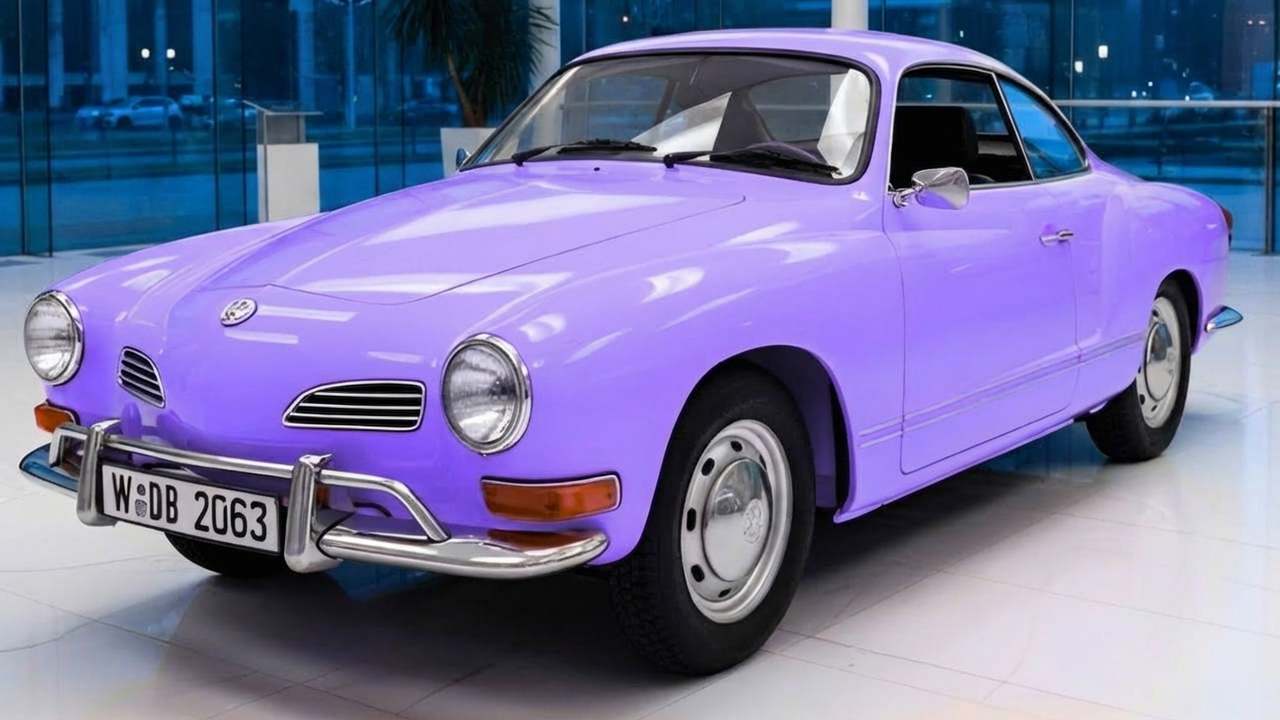
The origen y desarrollo of the Volkswagen Karmann Ghia is a study in smart collaboration: Italian flair from Ghia, German assembly by Karmann and the Beetle’s dependable air-cooled flat-four gave birth to a car that married diseño and accesible mechanics. In tracing that origen y desarrollo I look at engines, figures, driving impressions and what owning one costs today.

Origen y desarrollo: genesis and early years
The origen y desarrollo began in the mid-1950s when Volkswagen wanted a model that would bring styling refinement without inventing a new mechanical package. Ghia supplied elegant bodywork and Karmann handled assembly in Osnabrück. The result was launched at the 1955 Frankfurt show and production ran from 1955 to 1974, with more than 445,000 units built across coupe and convertible formats.


Design and packaging
Visually the Karmann Ghia presented smooth, flowing lines, a low beltline and minimal chrome compared with many contemporaries. It sat on the Beetle floorpan but looked far more moderno. Interior space was modest: the two-door layout meant tight rear plazas in many examples, and luggage capacity was limited, but materials and trim were considered good for the era. Seguridad features were basic by today’s standards — a rigid steel body and seatbelts on later models — but the car’s light weight helped handling and fuel efficiency.
Origen y desarrollo: engines, performance and economy
Mechanically the origen y desarrollo story was conservative and effective: air-cooled flat-four engines evolved from 1,192cc to 1,588cc over the production run. Below is a concise comparison of the most common options and real-world figures you can expect.

| Year / Variant | Engine (cc) | Power (hp) | Torque (Nm) | 0–100 km/h (s) | Top speed (km/h) | Fuel (L/100 km) |
|---|---|---|---|---|---|---|
| 1955–1960 (early) | 1,192 | 34 | 74 | ≈28 | 120 | 8.5 |
| 1961–1966 | 1,492 | 44 | 102 | ≈22 | 140 | 8.0 |
| 1967–1974 (late) | 1,584 | 57 | 115 | ≈20 | 145 | 7.5 |
Those figures underline that the Karmann Ghia never chased outright performance; it traded straight-line punch for style, handling balance and buena eficiencia for its time. Transmission was a four-speed manual across the board, with later models benefiting from improved carburation and ignition timing.
Driving impressions
Drive one and you feel the car’s lightness immediately. The steering is direct, the ride forgiving on cobbles and decent roads, and the chassis communicates in a way modern SUVs rarely do. Brakes are drum-based on most models — later cars received front discs in some markets — so stopping distances are longer than contemporary cars. The Karmann Ghia rewards smooth inputs; rush it and its modest torque shows. For many owners the appeal is the character: the sound of an air-cooled four, the tactile gear lever and the sense of being in a piece of automotive design history.

Features and practicalities
- Seating: typically 2 front plazas with cramped rear seats in many models.
- Safety (seguridad): basic by modern standards — seatbelts, solid body; no airbags.
- Efficiency (eficiencia): around 7.5–8.5 L/100 km in mixed driving for later engines.
- Maintenance: straightforward mechanicals, widely available parts, and a large enthusiast network.
Collectors should note that while electrics and body panels are serviceable, rust remains the Karmann Ghia’s long-term enemy; a sound shell commands a premium. The design has been renewed in the minds of collectors over the past two decades, pushing values up.
Market position and competitors
At launch the Karmann Ghia competed against stylish small GTs such as the Fiat 1200/1500, Renault Floride, and some British offerings from MG and Triumph. Today its closest rivals in the classic market are those same models — the Karmann Ghia usually trades at a premium relative to less-stylish Beetles but below high-end sports cars of the same era.
Typical values (US market, 2024): well-used projects from $12,000–$20,000, good driver-condition cars $25,000–$45,000, concours restorations $60,000+. Convertible (descapotable) versions typically sit at the higher end of those bands. Restoration costs vary wildly: expect $20,000–$50,000 for a full body-off restoration depending on standards.
Practical buying advice: prioritize a rust-free body shell, verify engine numbers and service history, and budget for suspension and brake upgrades if you intend regular use.
For buyers who want modern convenience, some workshops now offer sympathetic upgrades — improved brakes, electronic ignition and subtle reinforcements — that keep the car’s personality but improve daily usability. If you’re chasing originality, be prepared to pay more for numbers-matching examples.
Verdict
The Karmann Ghia’s origen y desarrollo is a lesson in how design can transform a humble mechanical base into something aspirational. It’s not a performance icon in raw numbers, but its combination of style, manageable running costs, and strong enthusiast support make it one of the most desirable European micro GTs. If you value character, historical significance and a modernized, usable classic, it’s worth considering — but buy carefully, pay attention to rust and be realistic about total ownership costs.
FAQ
How many plazas does a Karmann Ghia have?
Most Karmann Ghias are laid out as two-plus-two, with two comfortable front plazas and small rear seats more suitable for children or luggage.
What should I watch for when buying one?
Focus on rust (floors, sills, strut towers), the condition of the body shell, mechanical service history, and whether the car is numbers-matching if originality matters. Expect to invest in brakes and suspension for safe modern use.
Is it fuel-efficient compared with modern cars?
Relative to its era it’s efficient: late-model 1.6 engines can return around 7.5 L/100 km in mixed use. Compared with contemporary cars it’s less efficient and more polluting, and lacks features like catalytic converters or hybrid (híbrido) options.
How does it compare to similar classics?
Compared to the Fiat 1500 or Renault Floride, the Karmann Ghia often commands higher prices due to its design pedigree and Volkswagen’s mechanical reputation. It’s more refined in build than many small British sports cars of the same period.
Can I drive a Karmann Ghia daily?
Yes, with caveats. Upgrading brakes and electrics helps. Expect basic seguridad and limited modern creature comforts; it’s best as a weekend car or a careful daily in mild climates.